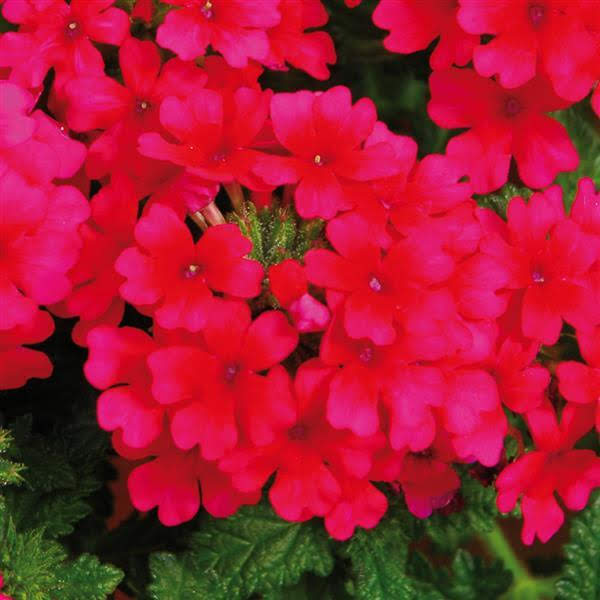
Glandularia
Verbena
Glandularia canadensis
Also known as: verbena
- Annuals Containers and Baskets
- Full Sun
Verbena (Glandularia canadensis 'Greystone Daphne') is an amazing plant that features unique grey-green foliage and tight clusters of soft purple, pink, or white flowers that will blossom until Frost. The striking foliage and bright blooms make this plant an excellent choice for any garden. Verbena has a vigorous habit and branches freely, making it ideal for massed plantings, beds, and borders. Plus, it doesn't require much maintenance or extra care and will attract beneficial insects to your garden. With proper care, it will bloom continuously from June to October. Verbena is a beautiful plant that will add beauty and color to any garden year round.
Care guides
Watering
Verbena (Glandularia canadensis 'Greystone Daphne') should have about 1-2 inches of water per week once the soil has started to dry out. Watering too often can increase the risk of root rot or fungal disease. Water first thing in the morning, if possible, to allow the leaves time to dry in the sun before nighttime. Avoid splashing water on the foliage, as this can spread disease.
Sunlight
Verbena (Glandularia canadensis 'Greystone Daphne') prefers full sun exposure for best flowering. They should be planted in a location that receives nearly 6 hours of direct sunlight each day. Verbena will perform moderately well in a location that receives 4 to 6 hours of direct sunlight. Although some afternoon shade is beneficial in extremely hot climates, it is best to provide the plant with full sun exposure for optimal growth and flowering. It is best to water Verbena in the morning to allow time for the foliage to dry before nightfall.
Pruning
Verbena (Glandularia canadensis 'Greystone Daphne') should be pruned regularly throughout the growing season, from mid-spring until early autumn. In general, pruning should be carried out when the plant is actively growing, and the best time for major pruning is in early to mid-spring. This species is not a heavy feeder and will benefit from a light trim after flowering.
When removing faded flowers or dead branches, prune back to a healthy bud or leaf set. It’s best to avoid pruning when the temperature is over 80 degrees F, as this increases the risk of shock or sunburn to the plant. Additionally, avoid pruning late in the season as this can encourage new growth that may not mature before cold temperatures arrive.