Tradescantia
Tradescantia Blue & Gold
Tradescantia hybrid
Also known as: Sweet Kate Spiderwort, Blue and Gold Spiderwort
- Perennials
- Zone 3
- Full Sun, Part Sun, Part Shade
- Medium
- 30–45 cm
- 30–45 cm
- 30–40 cm
- Low
- Filler
Bloom window: Early to Mid Summer
Toxic to pets.
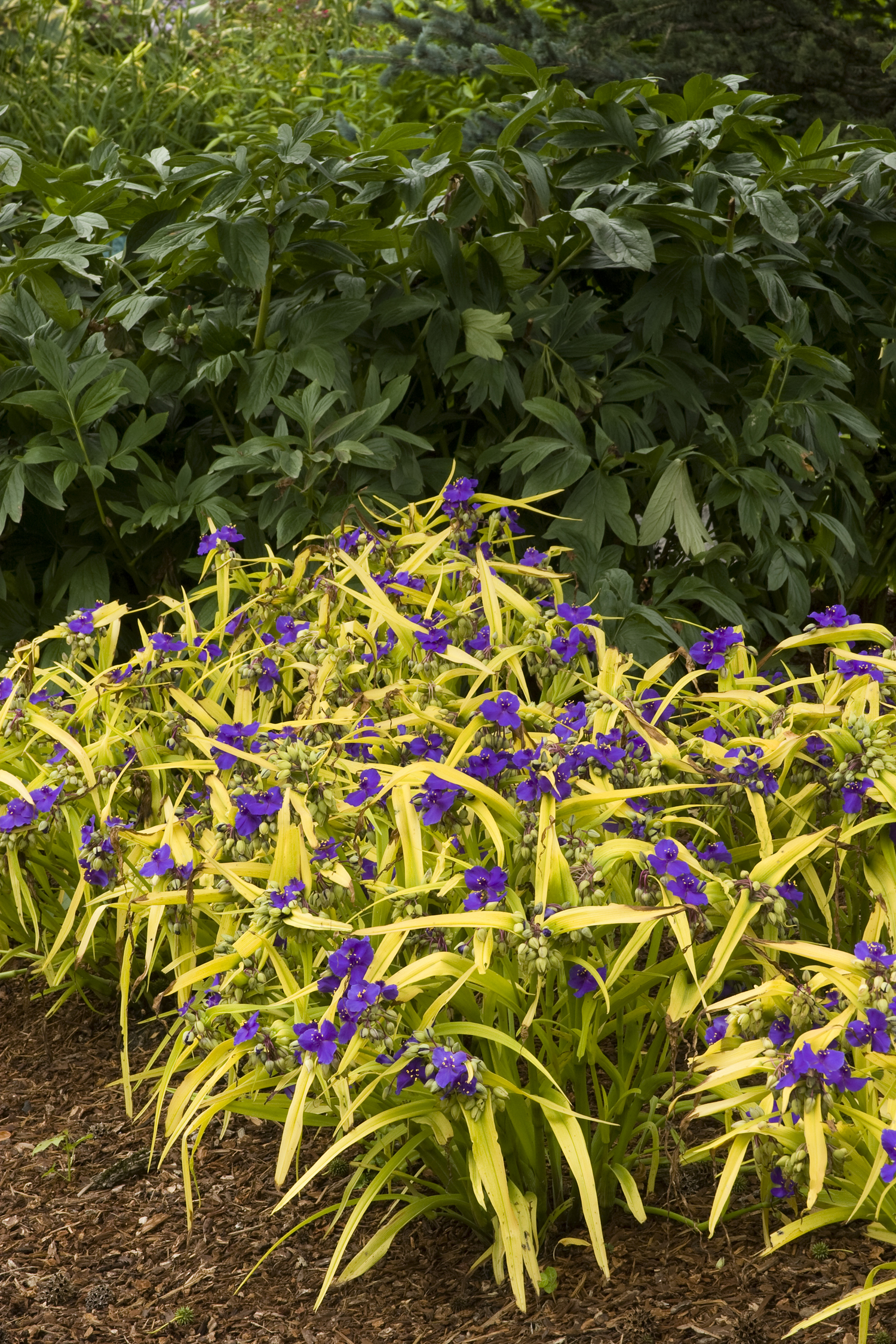
Tradescantia Blue & Gold (Sweet Kate type) pairs chartreuse-gold foliage with vivid blue-purple three-petaled flowers. A colorful, hardy perennial filler for sun to part shade borders with steady moisture.
- Soil
- Well-drained, Loam, Moist
- Native status
- Introduced
- Growth rate
- Moderate
- Flower colour
- Blue, Purple
- Foliage colour
- yellow, Green
- Foliage habit
- Deciduous
- Landscape use
- Border, Container, Mass planting
- Attracts
- Bees, Butterflies
Care guides
Watering
Water Tradescantia Blue & Gold deeply whenever the top 3–5 cm of soil dries during spring establishment and peak bloom. A thorough weekly soak usually outperforms light daily misting, especially on Manitoba clay that crusts in wind. Maintain even moisture through the bloom window, then ease back slightly as plants prepare for dormancy. Keep water off foliage late in the evening when possible to reduce foliar disease pressure.
Sunlight
Tradescantia Blue & Gold (Tradescantia hybrid) should be placed in full sun, part sun, or part shade. Aim for strong morning sun and lighter afternoon conditions—about 4–6 hours of direct light is usually ideal. In Steinbach heatwaves, unfiltered late-afternoon sun can pause flowering or crisp soft foliage, so a site with dappled afternoon relief often outperforms an all-day reflective south wall. Deep shade, however, stretches stems and cuts bloom count sharply. At a mature size around 30–45 cm, give neighbouring plants enough space so they do not shade out the crown as the season progresses.
Pruning
Deadhead spent blooms on Tradescantia Blue & Gold through the season to tidy the clump and, for many varieties, encourage side shoots or a lighter rebloom. After hard frost, cut deciduous stems back to a few centimetres above the crown, or leave ornamental seed heads standing for winter structure and wildlife if the stems stay sturdy. In early spring, clear remaining straw-like foliage before new shoots emerge. Use gloves if sap irritates skin, and note that this plant is toxic to pets if chewed.