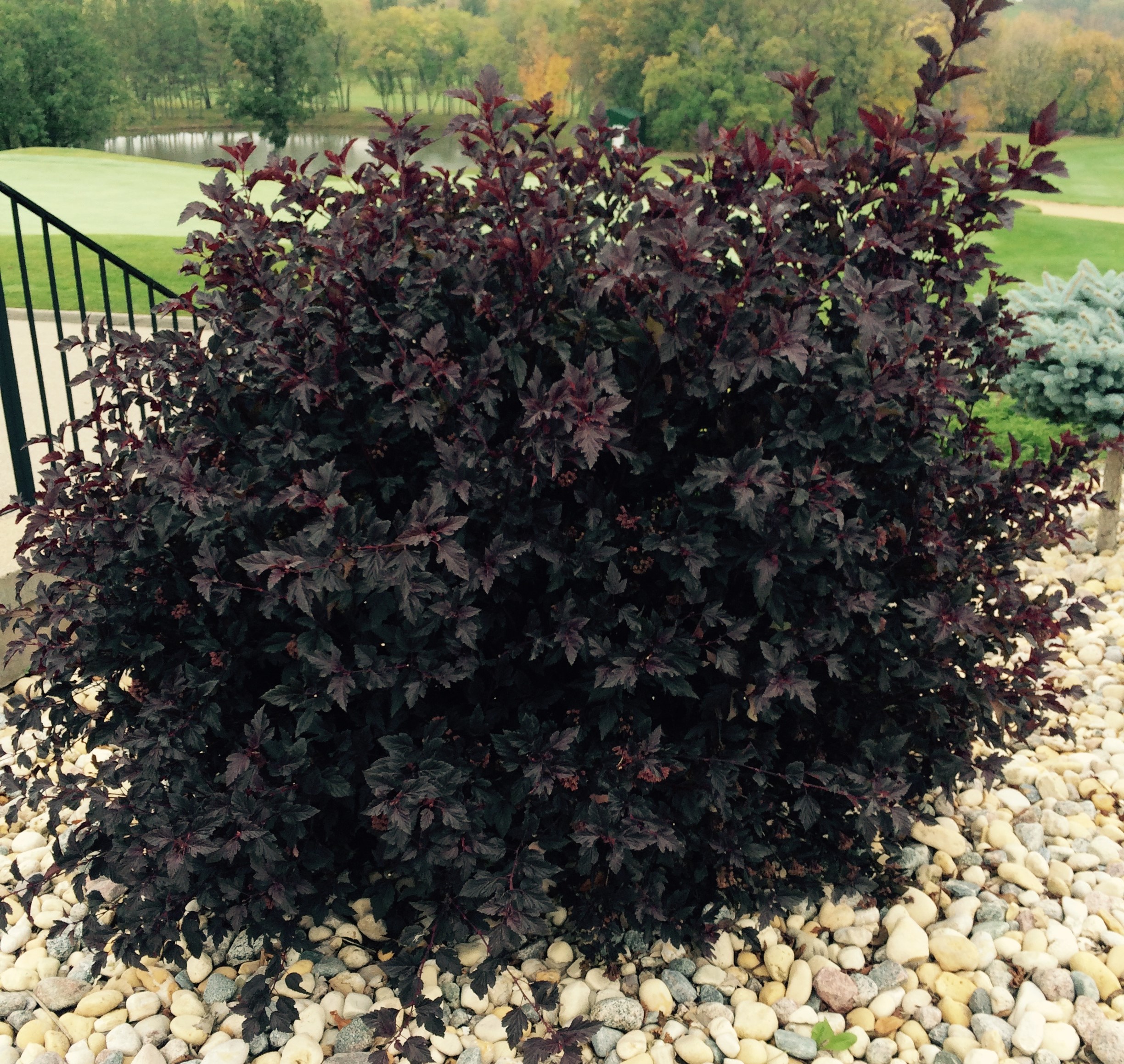
Physocarpus
Summerwine Ninebark
Physocarpus opulifolius
Also known as: Summer Wine Ninebark, Purple Ninebark
- Shrubs
- Zone 2b
- Full Sun
- Medium
- 1.5–1.8 m
- 1.5–1.8 m
- 1.5–1.8 m
- Low
Bloom window: Late Spring to Early Summer
Summerwine Ninebark is a compact purple-leaved ninebark with pinkish-white flower clusters and excellent cold hardiness. Fine-textured dark foliage makes a strong contrast shrub for prairie landscapes.
- Soil
- Well-drained, Clay, Loam
- Native status
- Introduced
- Growth rate
- Moderate
- Flower colour
- Pink, White
- Foliage colour
- Purple, Green
- Foliage habit
- Deciduous
- Landscape use
- Border, Hedge, Specimen
- Attracts
- Bees, Butterflies
- Resistant to
- Drought, Disease
Care guides
Watering
Summerwine Ninebark (Physocarpus opulifolius) needs deep, thorough root irrigation during its first 1–2 growing seasons in Steinbach so roots push well below the prairie frost line. Water slowly at the base until moisture reaches the outer root zone—typically a deep soak once or twice a week in hot, windy weather rather than daily shallow sprinkling, which encourages weak surface roots. After establishment, water deeply during prolonged drought and while fruit or new shoots are sizing in July–August. Avoid chronically waterlogged clay, which smothers roots. This selection is rated around Canadian zone 2b; snow cover helps, but dry open winters still demand that late-fall soak.
Sunlight
Summerwine Ninebark (Physocarpus opulifolius) should be placed in full sun. For strongest stems, colour, and flower or fruit production, provide at least 6 hours of direct daily sun, with morning light especially valuable before intense Manitoba afternoon heat. Sites under dense tree canopies or on the north side of buildings typically produce leggy growth, fewer buds, and weaker colour—avoid those locations for this plant. At a mature size around 1.5–1.8 m, give neighbouring plants enough space so they do not shade out the crown as the season progresses.
Pruning
Perform structural pruning on Summerwine Ninebark in late winter or very early spring while wood is fully dormant and before buds break. Remove dead, damaged, or crossing branches with clean, sharp bypass pruners or loppers, cutting just outside the branch collar. Thin crowded interior wood to improve airflow and light penetration through the canopy. Avoid heavy shearing into old leafless wood on evergreens and junipers; tip-prune lightly only if shaping is needed after the spring flush. Dispose of diseased wood in municipal green waste rather than composting it in a home pile when leaf spots or cankers are present.