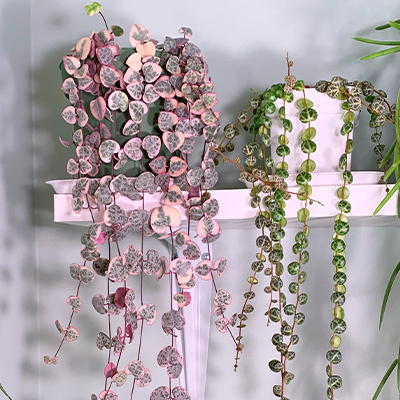
Ceropegia / Peperomia
Strings of Everything!
Ceropegia / Peperomia combo
Also known as: String of Hearts and String of Turtles Combo, Trailing Houseplant Combo
- Tropicals
- Part Sun to Part Shade
- Low
- 15–20 cm
- 60–90 cm
- one pot display
- Low
- Spiller
Strings of Everything! is a premium trailing combo pot featuring variegated String of Hearts (Ceropegia woodii 'Variegata') paired with String of Turtles (Peperomia prostrata). Heart-shaped pink-edged vines and turtle-shell patterned beads create a layered indoor/outdoor hanging statement.
- Soil
- Well-drained, Sandy
- Native status
- Introduced
- Growth rate
- Moderate
- Flower colour
- Pink
- Foliage colour
- Green, pink, Silver
- Foliage habit
- Evergreen
- Landscape use
- Container
- Resistant to
- Drought
Care guides
Watering
Strings of Everything! (Ceropegia) stores moisture in fleshy roots or succulent stems more than a typical bedding annual. Water thoroughly until excess drains from the pot, then wait until the upper third to half of the mix feels dry before watering again. Overwatering is the most common failure mode—never leave the pot sitting in a full saucer. In winter indoor light, stretch the interval further.
Sunlight
Strings of Everything! (Ceropegia) should be placed in part sun or part shade. Bright indirect light or gentle morning sun with protection from harsh afternoon rays keeps foliage lush. Harsh unfiltered midday sun can scorch leaves; very dark corners cause sparse, stretched growth. At a mature size around 15–20 cm, give neighbouring plants enough space so they do not shade out the crown as the season progresses.
Pruning
Trim Strings of Everything! by cutting just above a leaf node with clean shears to control length and encourage branching. Remove yellowing or damaged leaves at the base as they appear. Wipe dusty foliage occasionally so plants can photosynthesize efficiently indoors. In mixed trailing pots, pinch the faster partner so both species stay balanced in the display, and propagate tip cuttings if one lags behind. Reduce pruning in winter when growth naturally slows under lower light.