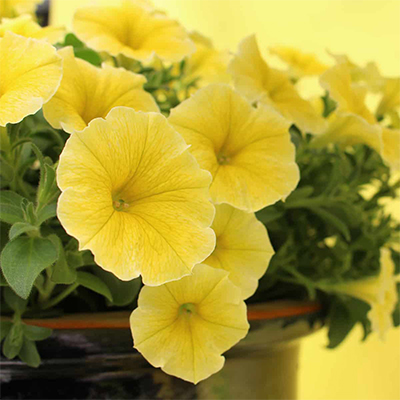
Petunia
Petunia Bee’s Knees (Trailing)
Petunia 'Ustuni6001'
Also known as: petunia
- Annuals
Petunia 'Ustuni6001' SUPERTUNIA VISTA BUBBLEGUM is an abundant flowering plant that produces clusters of bubblegum-pink blossoms along its lush foliage. It is covered in velvet-colored petals throughout the summer and grows up to 1.5 meters tall. To care for this plant, give it full sun, moist soil and regular deadheading to promote continuous bloom. It thrives well in high-humidity conditions and is a popular choice for dazzling flowerbeds, hanging baskets or large containers. This petunia is low maintenance and pesticide-free making it an ideal choice for novice gardeners.
Care guides
Watering
This plant species needs to be watered deeply once or twice a week during the growing season. It should be watered until the soil is evenly moist but never soggy. During the hottest summer days, water may need to be increased to more than twice a week. During the winter months, the frequency of watering should be reduced and only water when the top layer of soil is dry. When the soil is dry, petunia should be watered thoroughly until water runs freely out of the pot’s drain holes.
Sunlight
Petunia 'Ustuni6001' SUPERTUNIA VISTA BUBBLEGUM requires full sun to partial shade, meaning the plant should receive at least 6 hours of direct sunlight each day. This amount of sun is best when received between 10 am and 4 pm, as the morning and evening sun can be too intense for the plant. However, during periods of extreme heat, the plant should be moved to a spot that receives partial shade during the peak times of the day.
Pruning
Petunia 'Ustuni6001' SUPERTUNIA VISTA BUBBLEGUM plants should be pruned regularly to help maintain their shape, keep them healthy, and promote new growth. Pruning should be done in the late spring or early summer after the flowers have faded and before the petunias start to form new buds. Start pruning by removing any dead or diseased branches, then use pruning shears to cut back overgrown stems to the desired length. Try to maintain a symmetrical shape and take care to not over-prune or create jagged edges. After pruning, fertilize the petunias with a balanced fertilizer that's high in potassium and phosphorus to encourage blooming and healthy foliage.