Tropaeolum
Nasturium
Tropaeolum (group)
Also known as: nasturtium
- Annuals Beds and Borders
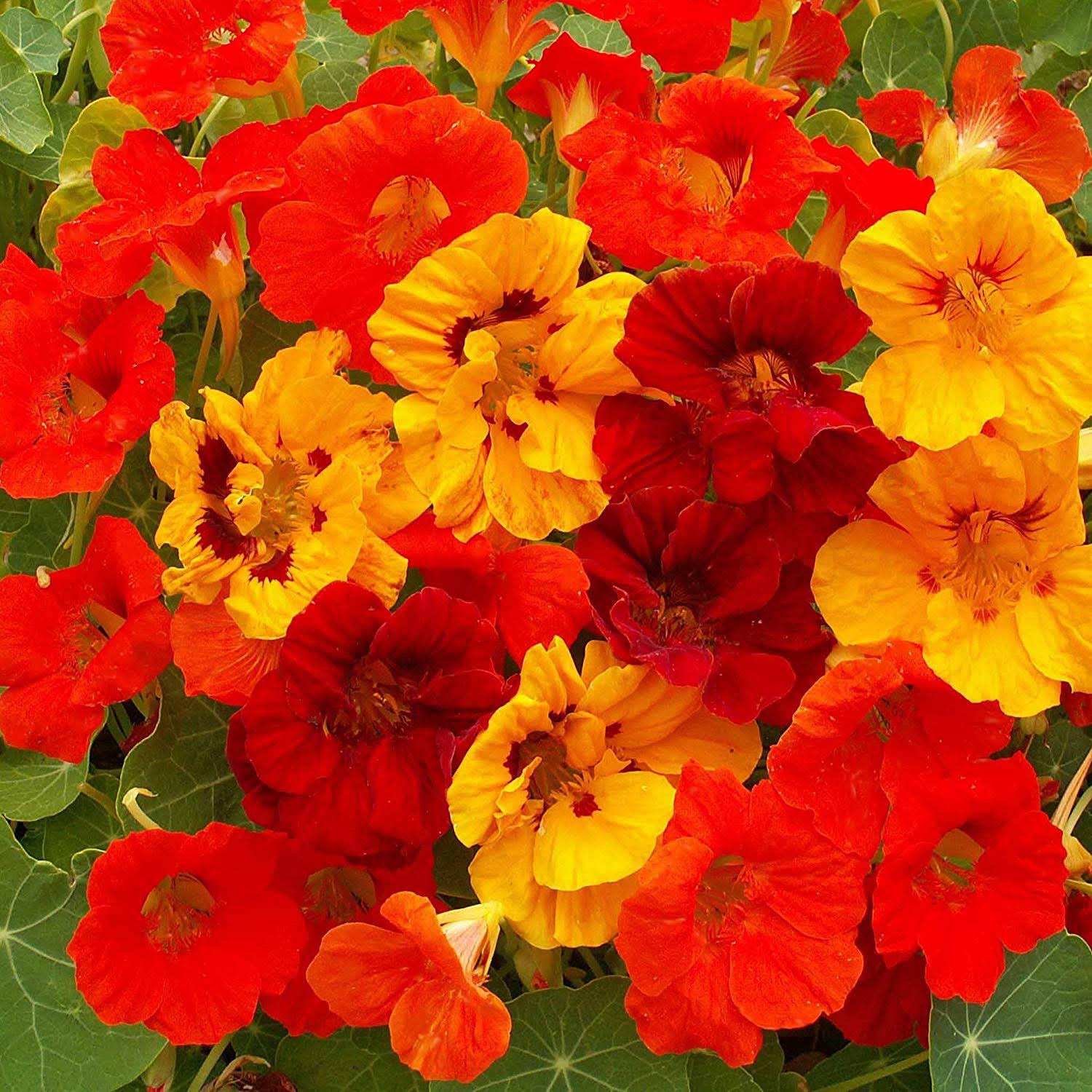
Nasturtium (Tropaeolum) is a genus of flowering annuals and perennials which includes over 80 species. It’s known for its bright, funnel-shaped flowers that range from yellow, orange, and mahogany to cream, red, and pink. Some nasturtiums produce small round fruits that taste peppery and can be used in salads and sauces. These easy-to-grow plants produce a wide range of foliage colors including purple, lime, and variegated. Nasturtiums are great for container planting, window boxes, and along pathways. The flowers attract beneficial insects and make wonderful cut flowers for bouquets.
Care guides
Watering
Watering nasturtium plants should be done regularly and deeply from the base of the plant. Keep the soil around the plant moist but not overly wet. Water the plant 1 to 2 times per week, depending on weather conditions. If nasturtiums have access to full sun, more frequent watering may be necessary. Make sure the soil has time to dry out in between waterings. During the cooler fall and winter months, you can reduce the frequency of watering. Wait until the top few inches of soil have dried out before you water again.
Sunlight
Nasturtiums are plants that generally prefer 6 hours or more of direct sunlight per day. The ideal time for nasturtiums to receive sunlight is between 9am and 3pm - the hours when the sun is strongest. Though nasturtiums can survive in shadier areas, they will not thrive without at least 6 hours of strong sun per day.
Pruning
Nasturtiums should be pruned every few weeks during their active growing season. Many gardeners prefer to do a light pruning or pinching of the stem tips, which encourages bushy and controlled growth. Pruning should be done regularly (every few weeks) until the late summer when flowering begins to slow down and the plants starts to die back. At this point, heavy pruning can be done to clean up the plant and encourage more flowers. In colder climates, the plants will generally die off by mid to late autumn and can be cut back to soil level and removed.