Juniperus
Medora Juniper
Juniperus scopulorum
Also known as: Medora Upright Juniper, Rocky Mountain Juniper Medora
- Evergreens
- Zone 3a
- Full Sun
- Low
- 3–3.5 m
- 60–90 cm
- 90–120 cm
- Low
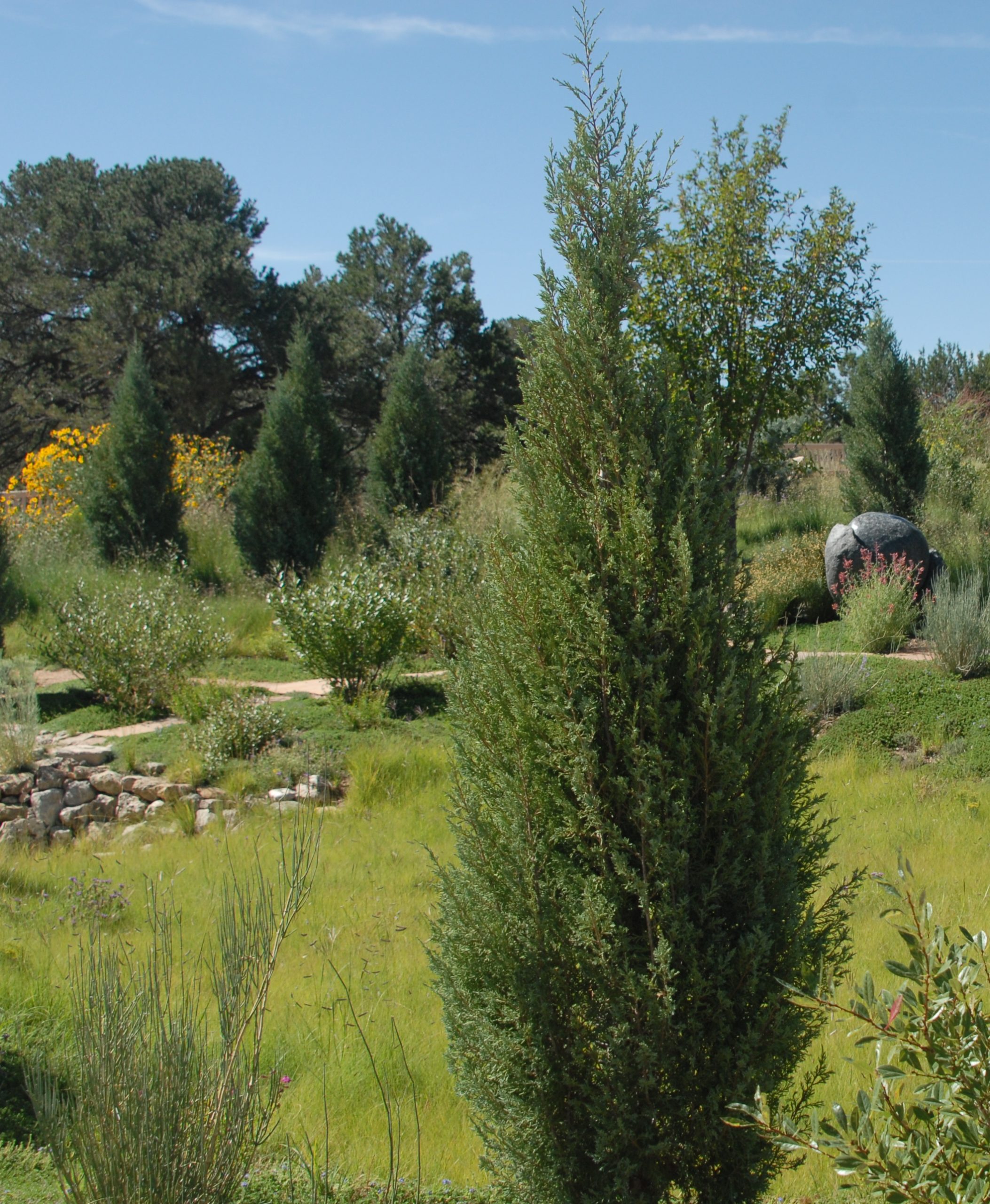
Medora Juniper is a narrow, upright Rocky Mountain juniper with soft blue-green foliage and exceptional prairie hardiness. It forms a compact columnar accent for foundations, entrances, and wind-tolerant evergreen structure in Zone 3 landscapes.
- Soil
- Well-drained, Sandy, Rocky
- Native status
- Introduced
- Growth rate
- Slow
- Foliage colour
- Green, Silver
- Foliage habit
- Evergreen
- Landscape use
- Specimen, Hedge, Border
- Attracts
- Birds
- Resistant to
- Drought, Deer, Disease
Care guides
Watering
Medora Juniper (Juniperus scopulorum) needs deep, thorough root irrigation during its first 1–2 growing seasons in Steinbach so roots push well below the prairie frost line. Water slowly at the base until moisture reaches the outer root zone—typically a deep soak once or twice a week in hot, windy weather rather than daily shallow sprinkling, which encourages weak surface roots. Once established it is comparatively drought-tolerant; water mainly during multi-week dry spells and always give one generous soak in late October before the ground locks up, to buffer foliage and wood against winter desiccation winds. This selection is rated around Canadian zone 3a; snow cover helps, but dry open winters still demand that late-fall soak.
Sunlight
Medora Juniper (Juniperus scopulorum) should be placed in full sun. For strongest stems, colour, and flower or fruit production, provide at least 6 hours of direct daily sun, with morning light especially valuable before intense Manitoba afternoon heat. Sites under dense tree canopies or on the north side of buildings typically produce leggy growth, fewer buds, and weaker colour—avoid those locations for this plant. At a mature size around 3–3.5 m, give neighbouring plants enough space so they do not shade out the crown as the season progresses.
Pruning
Maintenance on Medora Juniper is minimal. In early summer after the main flush, lightly tip-prune only to maintain outline if required. Do not cut back into bare brown wood that lacks green needles or sprays—those areas rarely resprout. Remove snow-broken or winter-burned tips cleanly in spring. A deep watering before freeze-up does more for winter appearance than frequent midwinter pruning.