Tagetes
Marigolds
Tagetes patula
Also known as: Durango Flame Marigold, Durango Bee French Marigold, Bicolor French Marigold
- Annuals Beds and Borders
- Full Sun
- Medium
- 25–30 cm
- 20–25 cm
- 20–25 cm
- Low
- Filler
Bloom window: Late Spring to Frost
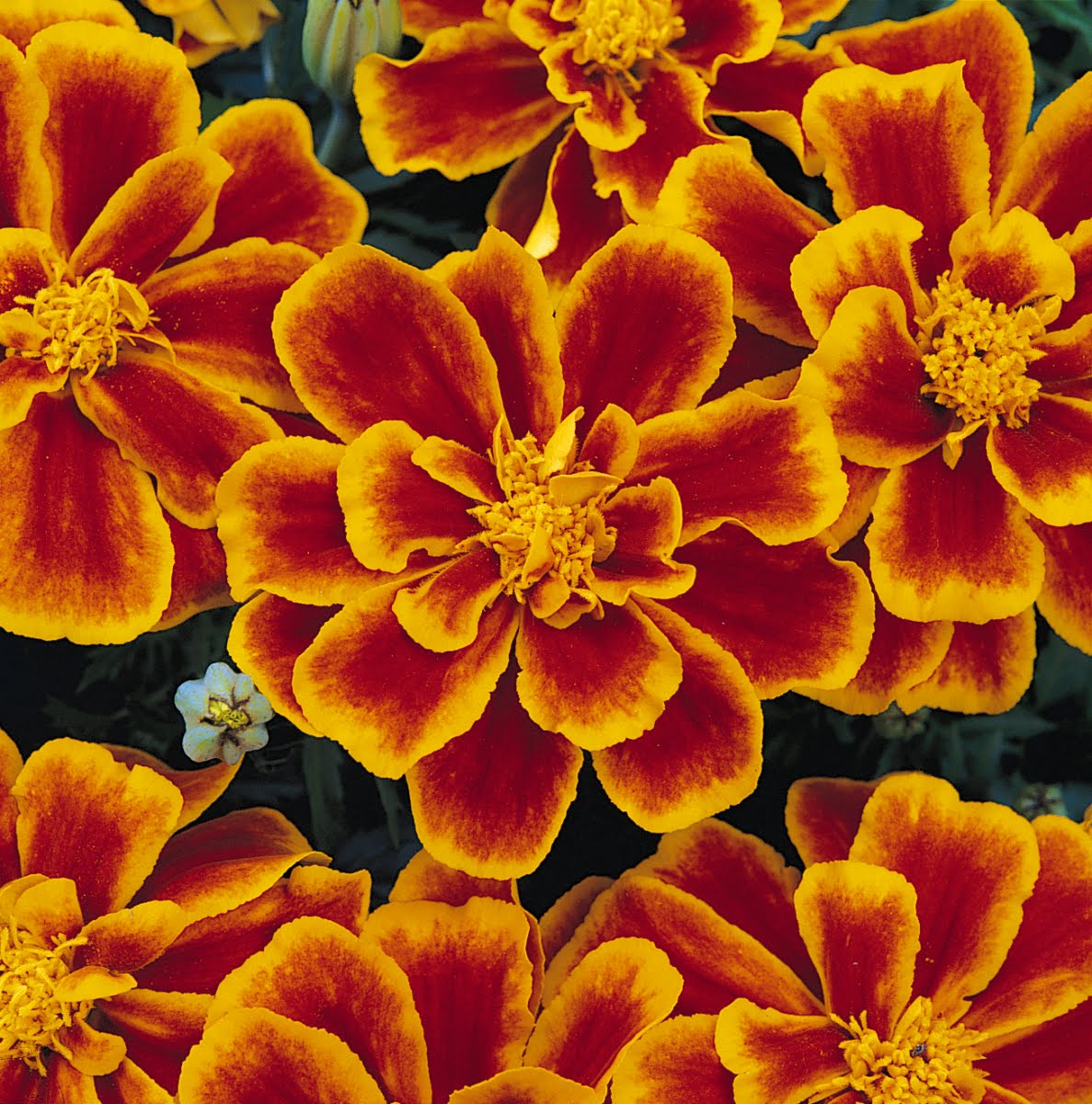
Marigolds in this listing represent the Durango Flame / Bee-style French marigold: the same compact Durango plant habit with dramatic bicolor blooms—deep crimson or mahogany centers edged in bright golden yellow. A high-impact filler for sunny beds, pots, and borders until hard frost.
- Soil
- Well-drained, Loam
- Native status
- Introduced
- Growth rate
- Fast
- Flower colour
- Yellow, Orange, Bicolor
- Foliage colour
- Green
- Foliage habit
- Deciduous
- Landscape use
- Border, Container, Mass planting
- Attracts
- Bees, Butterflies
- Resistant to
- Drought, Pests, Deer, Rabbits
Care guides
Watering
Marigolds performs best when the potting mix or bed soil stays evenly moist like a well-wrung sponge during active flowering. Water thoroughly until moisture runs from container drainage holes, or until garden soil is wet through the root zone, then wait until the top 2–3 cm begins to dry before the next full soak. Consistent deep watering beats frequent shallow sprinkles that never reach the full root ball. Always confirm drainage is unobstructed to prevent crown and root rot.
Sunlight
Marigolds (Tagetes patula) should be placed in full sun. For strongest stems, colour, and flower or fruit production, provide at least 6 hours of direct daily sun, with morning light especially valuable before intense Manitoba afternoon heat. Sites under dense tree canopies or on the north side of buildings typically produce leggy growth, fewer buds, and weaker colour—avoid those locations for this plant. At a mature size around 25–30 cm, give neighbouring plants enough space so they do not shade out the crown as the season progresses.
Pruning
Most modern Marigolds selections are largely self-cleaning, dropping spent blooms without constant attention. Still, pinch soft tips 1–2 weeks after planting to force lateral branching, and shear plants back by about one-third in midsummer if heat, wind, or storms leave them thin or leggy—fresh growth and a strong late-season flush usually follow within 10–14 days. Strip yellowing lower leaves to keep the canopy neat. Pull plants after the first hard frost and compost only disease-free material.