Lonicera
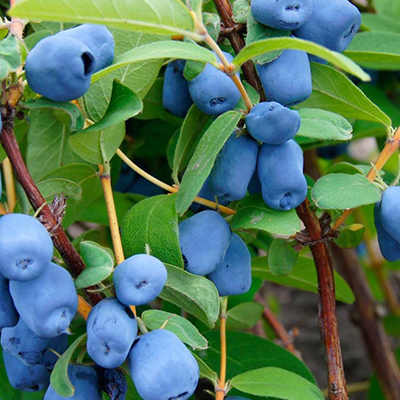
Haskap (Honeyberry)
Lonicera caerulea
Also known as: Haskap, Honeyberry, Blue-Berried Honeysuckle, Sweetberry Honeysuckle
- Fruit
- Zone 3a
- Full Sun
- 1.2–1.8 m
- 1.2–1.5 m
- 1.5 m
- Low
Bloom window: Spring
- Soil
- Well-drained, Clay, Loam
- Foliage habit
- Deciduous
- Landscape use
- Border, Hedge
Care guides
Watering
Haskap requires regular, deep watering during its initial two growing seasons in Steinbach to secure a broad root framework. Once established, it possesses great resilience but performs best with consistent moisture during its spring fruiting phase. Water deeply at the soil base once a week when topsoil feels dry. Ensure proper drainage, as prolonged stagnant mud can compromise root health. Give the bush one final deep soak in late October before the ground completely locks up.
Sunlight
This berry-producing shrub functions best in a full-sun placement, requiring a minimum of 6 hours of direct daily sunlight. Maximizing sun exposure is the key mechanism required to increase fruit sugars, accelerate the ripening of its elongated blue berries by late June, and maintain a dense canopy structure. While it tolerates partial shade, fruit yields will drop significantly.
Pruning
Minimal pruning is required for the first 3 to 4 years to let the bush build its structure. For mature plants, prune annually in late winter or early spring (late March to early April) while the wood is strictly dormant. Cleanly prune away weak, crossing, or damaged branches. Selectively trim 1 or 2 of the oldest, thickest interior canes down to the ground level each year to trigger a flush of productive new wood, as Haskap bears its heaviest crops on one-year-old branches. Crucial Pollination Note for Customers: Haskap strictly requires cross-pollination to set fruit. Customers must purchase two different varieties that bloom at the same time (e.g., pairing your list's Canadian superstar 'Borealis' with 'Tundra' or 'Honeybee') planted within a few meters of each other to ensure successful pollination and a heavy harvest.