Spiraea
Goldmound Spirea
Spiraea japonica
Also known as: Japanese meadowsweet, fortune meadowsweet, Japanese spiraea
- Shrubs
- Zone 3a
- Full Sun, Part Sun, Part Shade
- Medium
- 120–185 cm
- Low
Bloom window: Spring
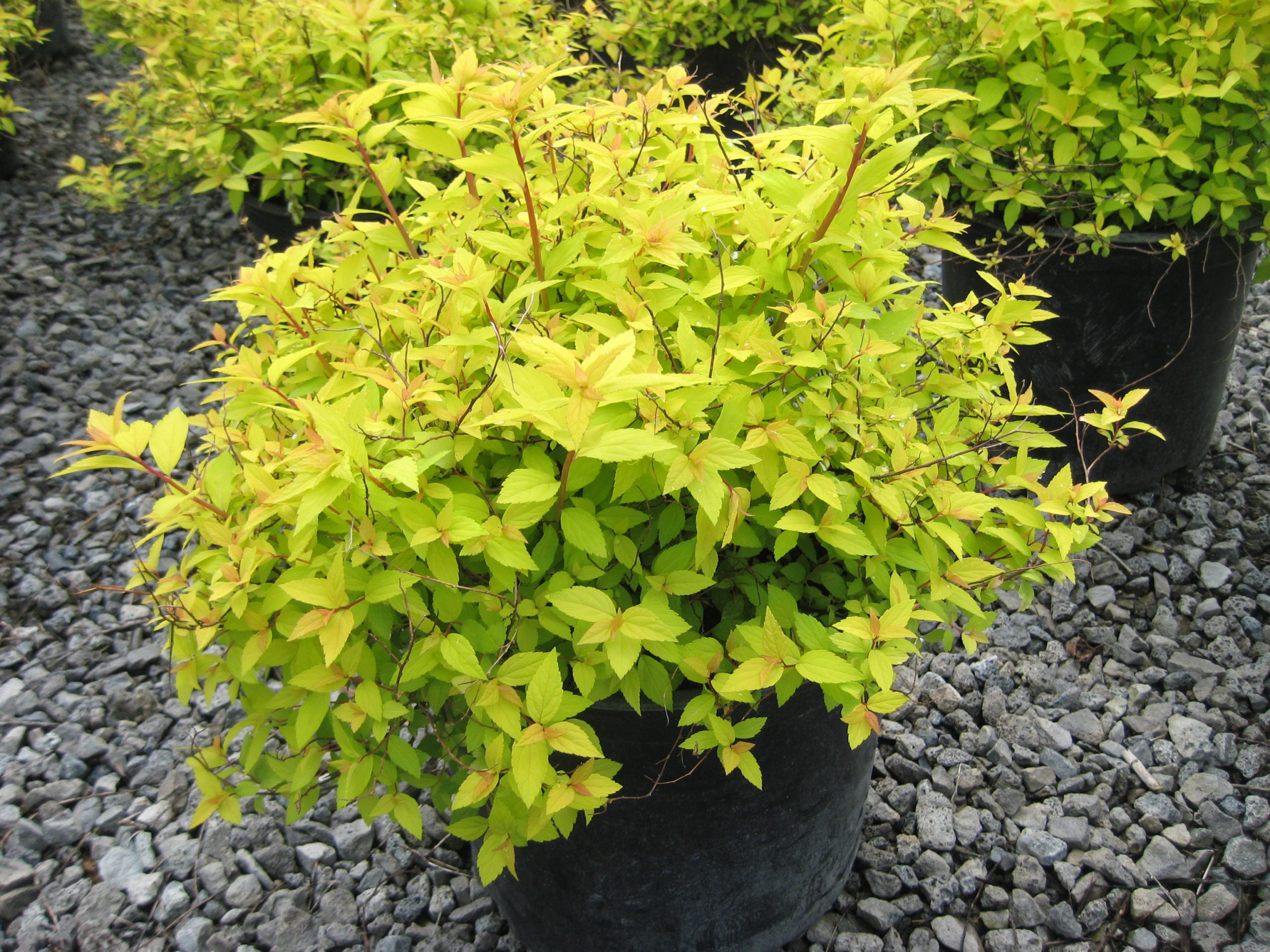
Japanese Spirea (Spiraea japonica 'Gold Mound') is a lacy, mounding shrub that’s ideal for adding color and texture to any garden or landscape. Growing up to to 3 feet tall, this fast-growing flowering perennial is known for its bright yellow foliage and clusters of white blooms from late May to June. Japanese Spirea needs full sun to part shade and evenly moist soil, making it an attractive, low-maintenance option for both small and large gardens. It's a great choice for adding sequence and beauty, whether planted as a feature in a colorful border or used as edging.
- Native status
- Introduced
- Growth rate
- Fast
- Foliage habit
- Deciduous
- Attracts
- Butterflies
- Resistant to
- Deer, Drought
Care guides
Watering
Japanese spirea (Spiraea japonica 'Gold Mound') should be watered once a week in the summer months and every other week in the winter months. To determine how much water to use, check the soil an inch below the surface for dryness; if it is dry, give the plant enough water to thoroughly moisten the soil, but be careful not to overwater. For best results, water early in the day so the leaves have a chance to dry before nightfall.
Sunlight
Japanese spirea prefers full sun for best growth, however it will tolerate some light shade. Young plants should be planted in an area that gets at least 6 to 8 hours of direct sunlight each day. Plants grown in areas with less than 6 hours of sunlight will be leggy and require extra pruning or staking. As plants mature, they become more shade tolerant and can tolerate up to 4 hours of direct sunlight each day.
Pruning
Japanese spirea should be pruned twice a year - once in early summer, directly after it finishes blooming; and again in late winter or very early spring. For the first pruning, remove up to a third of the oldest, woodiest stems, cutting them back to ground level or just above it. This will promote vigorous new growth and help keep the shrub neat, tidy, and bushy. For the second pruning, take off any dead or weak stems, as well as any new shoots that appear over-long, or are growing in an unsightly direction. Depending on the severity of the pruning, only a few minutes to an hour may be needed.