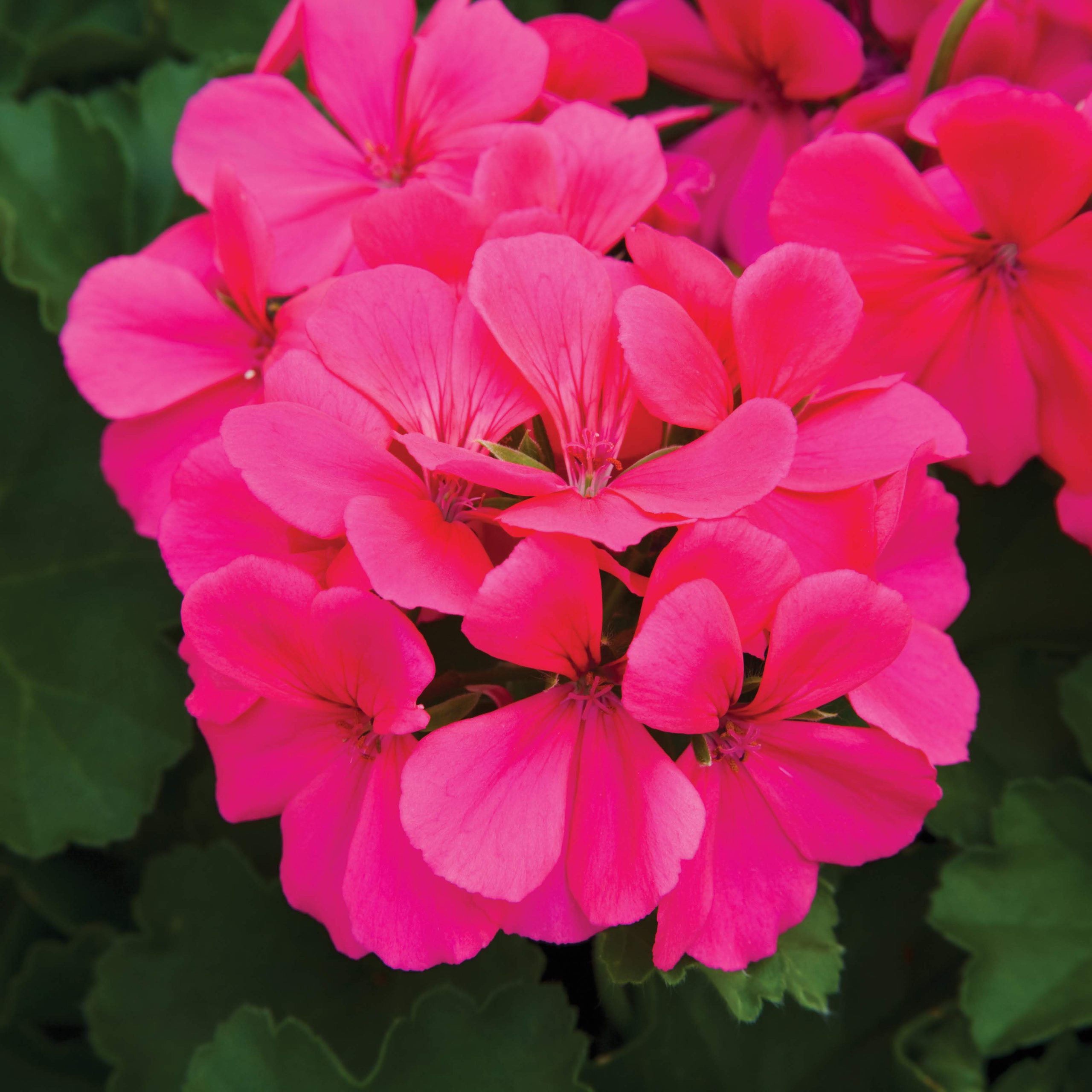
Pelargonium
Geraniums Semi-Trailing
Pelargonium
Also known as: Interspecific Geranium, Semi-Cascading Geranium, Hybrid Ivy-Zonal Geranium
- Annuals Containers and Baskets
- Full Sun to Part Sun
- 30–40 cm
- 45–60 cm
- 30–35 cm
- Low
- Filler
Bloom window: Spring, Summer, Late Summer, Fall
Toxic to pets.
Mounding Trailing. Tons of Blooms
- Soil
- Well-drained, Loam
- Native status
- Introduced
- Growth rate
- Fast
- Foliage habit
- Deciduous
- Landscape use
- Container, Mass planting
Care guides
Watering
Semi-Trailing Interspecific Geraniums feature robust, semi-succulent structural stems engineered to withhold moisture, granting them world-class heat and short-term drought resilience once established. It is vital to operate on a strict "drench-and-dry" watering routine. Always wait until the upper 3–5 cm of the potting medium or basket substrate feels dry to the touch before watering deeply until it exits the bottom drainage ports. Because hanging baskets exposed to Steinbach's drying summer winds lose water rapidly, monitor them daily in July and August, but ensure they never sit in waterlogged saucer trays to prevent root rot.
Sunlight
This sun-loving hybrid classification strictly demands a prime full-sun to partial shade position, requiring a minimum of 6 hours of direct, unfiltered solar exposure daily. Ample UV energy serves as the core engine that drives its prolific, season-long flower production and preserves the deep green, glossy leaf density. Placing semi-trailing geraniums in heavy shade will cause the trailing vines to stretch out unevenly, result in thin, pale green-washed leaves, and severely shut down flower bud development.
Pruning
Maintenance is exceptionally straightforward. While older ivy geraniums required intensive grooming, advanced semi-trailing interspecific series are highly celebrated for being mostly self-cleaning, with spent petals dropping away naturally. To maintain peak presentation and force maximum blooming performance, check the plants occasionally and cleanly practice deadheading. Follow a faded flower stalk down to its structural joint and snap it off cleanly with a quick thumb flick to instantly redirect raw energy into fresh bud expansion. If the mounded vines become slightly uneven or step outside their planter bounds by late August, a light tip trim will quickly trigger a dense flush of side-branching.