 Annuals
Geranium
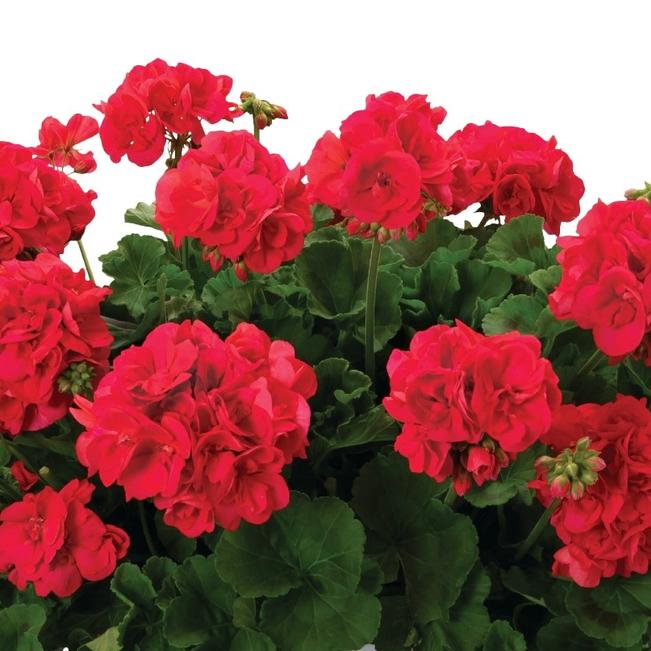
Geranium Big Eeze
Geranium hortorum
Also known as: geranium, crane's-bill
- Full Sun to Part Shade
- Medium
- 30–90 cm
- Low
Toxic to pets.
Zonal geranium (Pelargonium hortorum) is a popular flowering annual grown as a house plant or in warm climates. Its large, fragrant flowers bloom in rich shades of rose, white, and red and contrast nicely with its green, velvet-like foliage. Zonal geraniums thrive in full sun and require adequate water during periods of drought. Their ability to withstand some cold temperatures and a light frost make them great container plants for outdoor decor. Zonal geraniums are an easy to care for, long blooming annual that brings an abundance of color to your outdoor living space.
Plant Care Guides
Watering
Zonal geraniums require thorough watering, but should never be over-saturated. Water your zonal geranium when the top inch of soil feels dry, but before the leaves start to droop. It is best to water at the base of the plant with a gentle flow of water in order to decrease the chances of over-watering, which can cause root rot. Water about once every 5-7 days depending on your plant’s environment, such as humidity and temperatures in your home, and also be sure to water the plant more often if placed outdoors during the hot summer months.
Sunlight
Zonal geraniums thrive best in full sun, meaning they should receive at least 6 hours per day of direct sunlight. The best time to provide the plants with sunlight is during the daytime hours, when the sun is at its peak intensity. The sunlight should be evenly distributed throughout the day, so it's important to rotate the geraniums every few days so they get even exposure on both sides.
Pruning
Zonal geraniums (Pelargonium hortorum) should be pruned regularly throughout the growing season to maintain their best appearance. Light general trimming should be done in early spring to remove dead or weak growth. Heavy pruning should then be done in late spring to early summer. This pruning should focus on cutting away old or dead foliage as well as leggy or overly-long stems. To shape and encourage bushiness, cut back the stems to the desired height. Finally, repeat the light trimming in late summer to early fall to maintain shape.