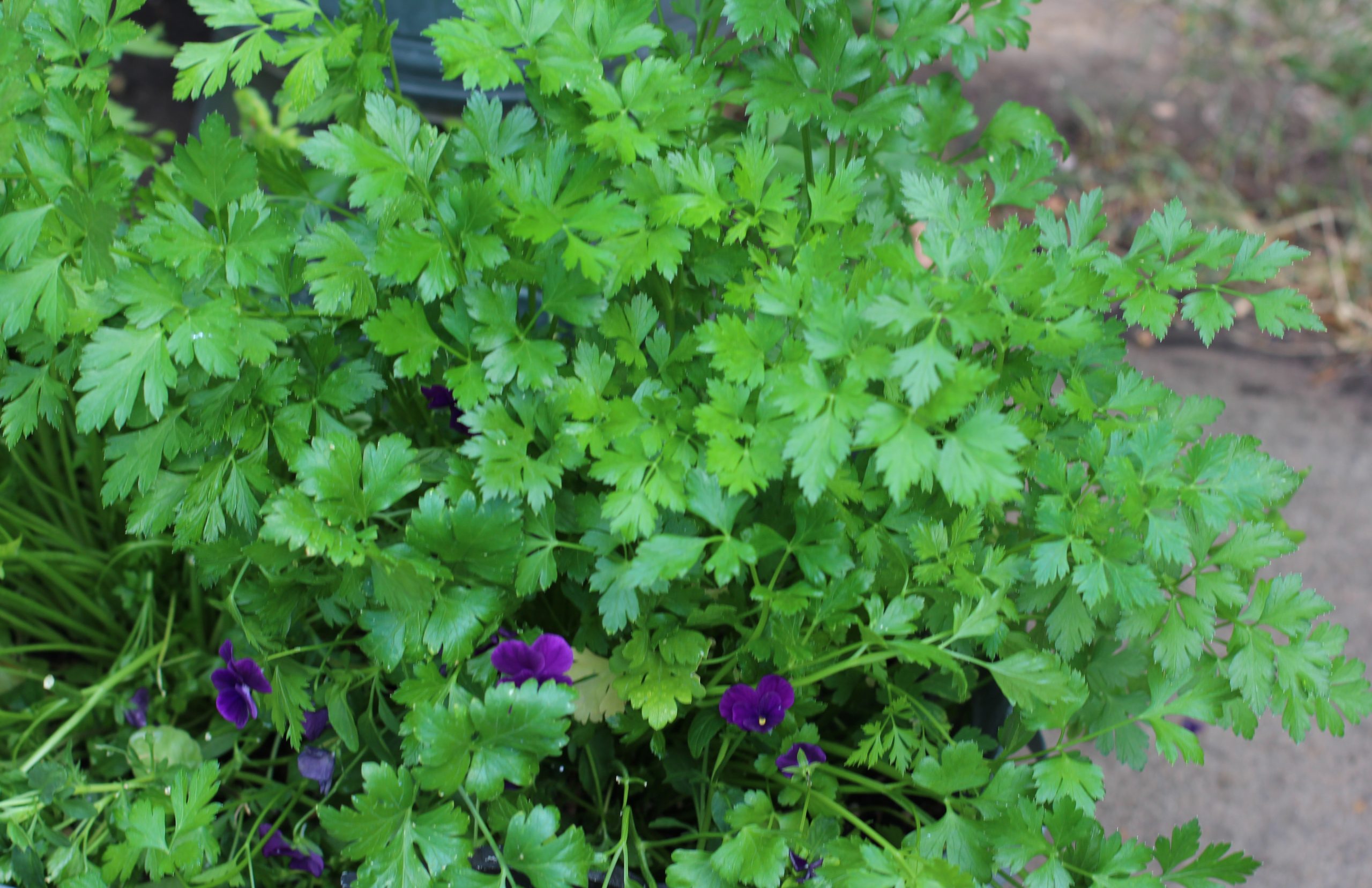
Petroselinum
Flatleaf Parlsey
Petroselinum crispum
Also known as: garden parsley, parsley
- Veggies & Herbs
- Full Sun, Part Sun, Part Shade
- Medium
- 25–30 cm
- Low
Bloom window: Summer
Parsley (Petroselinum crispum) is an herb used widely in cooking. It is a biennial plant with curly or flat leaves, occurring naturally in temperate climates. Rich in vitamins and minerals, parsley has many culinary and medicinal uses. Its leaves are often used to add piquancy to dishes, such as salads, soups, sauces and fish. Its roots can be boiled and added to soups. Parsley seed can also be used for flavoring. Parsley can be added fresh (dried is less aromatic) to recipes at the end of cooking for the greatest flavor.
- Foliage colour
- Green
Care guides
Watering
Parsley (Petroselinum crispum) should be watered on a regular basis to ensure that the soil is evenly moist. Water when the top 1-2 inches of soil feels dry to the touch. Make sure that the soil drains well. If standing water pools on the soil surface, the plant’s roots may rot. Give parsley about an inch of water every week, providing more during periods of extreme heat. Allow the soil to become slightly dry between waterings.
Sunlight
Parsley (Petroselinum crispum) is a plant that requires an abundance of sunlight to thrive. It prefers around 6-8 hours of direct sunlight each day, preferably during the mid-day hours when the sun is at its strongest. When grown outdoors, parsley should be planted in a spot that gets direct sunlight for at least a few hours each day, and late afternoon shade to prevent wilting. If grown indoors, parsley should be placed near a south- or west-facing window to get the best sunlight exposure.
Pruning
Parsley (Petroselinum crispum) should be pruned after its flowering period. Prune back the stems of parsley by about 1-third to 1-half their original size. This encourages new growth and higher yields of leaves. It is best to prune parsley in the spring or early summer. Remove dead or discolored leaves and stems, plus any yellowed flower stalks after they have finished flowering. It is also beneficial to divide established plants in spring or fall by carefully dividing the roots and replanting in a new location.