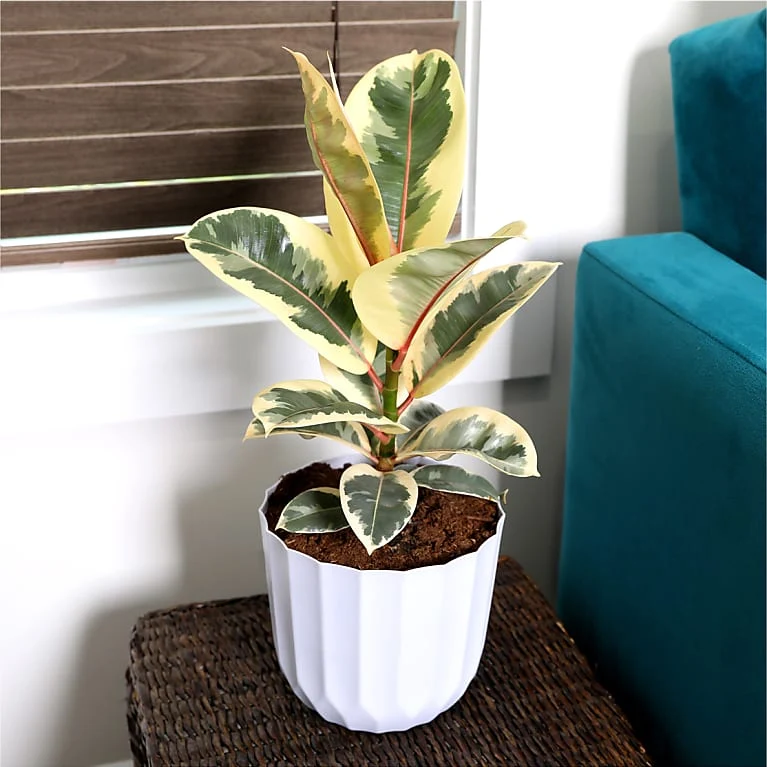
Ficus
Ficus Tineke
Ficus elastica
Also known as: Variegated Rubber Plant, Tineke Rubber Tree, Ficus Tineke
- Tropicals
- Part Sun to Part Shade
- 0.9–1.8 m
- 0.6–0.9 m
- 0.9 m
- Medium
- Thriller
Toxic to pets.
- Soil
- Well-drained, Loam
- Native status
- Introduced
- Growth rate
- Fast
- Foliage habit
- Evergreen
- Landscape use
- Container
Care guides
Watering
Ficus Tineke thrives on a strict "drench-and-dry" cycle and is highly sensitive to wet feet. Always wait until the top 5 cm of the potting medium dries out completely before watering thoroughly until water streams freely from the base drainage holes. Because indoor air gets exceptionally dry during Steinbach's long winter heating season, mist the foliage occasionally or wipe them down with a damp cloth to clear dust and slightly raise ambient humidity. Never leave stagnant water pooling in the lower tray, which causes root rot.
Sunlight
This variegated tree requires bright, indirect sunlight to preserve its watercolor-like leaf patterns. Position it close to an east-facing window or set it back 1 to 2 meters from a south- or west-facing window. Gentle morning sunlight is highly beneficial and keeps the creamy variegation vivid; however, avoid harsh, unfiltered afternoon sun, which will instantly scorch the cream margins, causing unsightly brown patches. Too little light will force the plant to lose its vibrant variegation and grow leggy.
Pruning
Pruning is mostly done to maintain a tidy shape or control final indoor size. Perform structural trimming in early spring using a pair of sharp, sanitized bypass pruners. When cut, the stems will ooze a thick, milky white sap that can irritate bare skin and stain floors, so always wear gloves and lay down a drop cloth. Snapping or trimming the main vertical stem will instantly force the tree to redirect energy into bushy, lateral branching. Healthy tip cuttings can be easily propagated in water or damp perlite.