Juniperus
Calgary Carpet Juniper
Juniperus sabina
Also known as: savin juniper, savin
- Evergreens
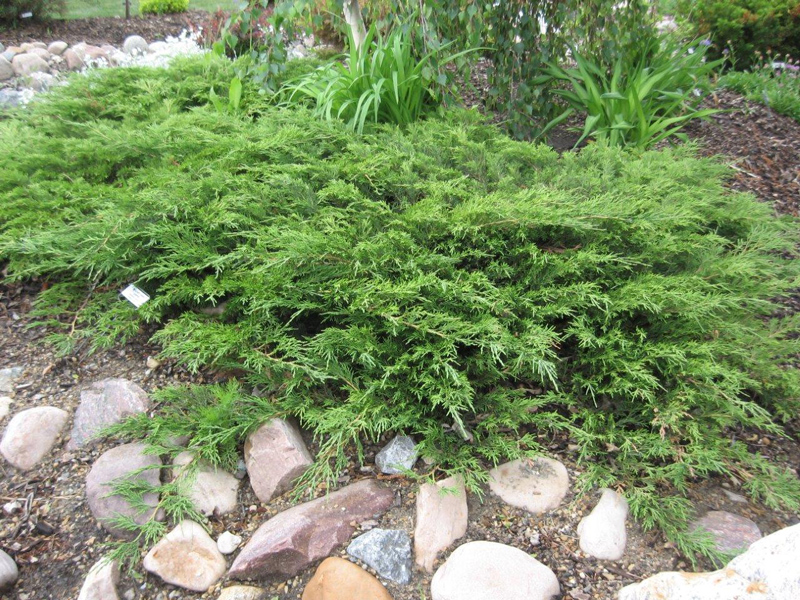
Savin Juniper is an evergreen conifer shrub native to many mountainous regions of Europe and Asia. It typically grows up to six feet tall and can spread up to eight feet wide. Its grey-green foliage is made up of thin, scale-like leaves. In the winter the foliage turns a purple-brown colour. Its main distinguishing feature is the deep red-brown bark which flake off in scales. In spring it produces small, green-purple flowers that later become purplish-black berries. Savin Juniper is an excellent hedge or edge plant for gardens and landscapes, and its hardiness allows it to thrive in many locations.
Care guides
Watering
Savin juniper (Juniperus sabina) should be watered approximately once a week during the warmer seasons when the soil is not frozen. If the soil feels dry to the touch, it’s time to water. During the winter months, watering should be reduced, but watch the soil to make sure it is not completely dry. Make sure to water the root zone of the plant and not just spray the foliage. Watering in the morning is best so the plant has the entire day to absorb the water.
Sunlight
Savin juniper (Juniperus sabina) thrives in areas with full sun to partial shade. It is most successful when planted in an area that receives at least 6 hours of direct sunlight per day. For areas of the country with hot summers, the savin juniper will benefit from afternoon shade. When grown in areas with a lot of shade, the savin juniper will not grow as well and may display signs of stress such as yellowing, pests, and disease.
Pruning
Savin juniper (Juniperus sabina) should be pruned twice a year. In late spring or early summer, thin out the branches to reduce their density. Then in late summer or early fall, cut back the branches by up to a third of their length to prevent it from becoming overgrown and to encourage dense foliage. Pruning shears should be used when cutting the branches, and aiming for an overall symmetrical shape is best. Keep in mind that this plant species is sensitive to over pruning, so it's important to limit the amount of pruning done.