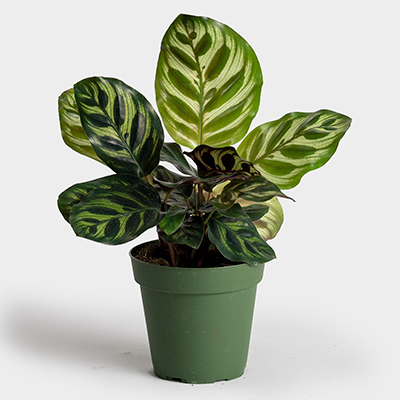
Calathea
Calathea
Calathea roseopicta
Also known as: calathea
- Tropicals
Calathea roseopicta, commonly known as Rose Painted Calathea, is a tropical houseplant that has foliage patterned with dark green borders and lighter pinkish-gray or silver markings. Vibrant, dark green stripes stretch across a lime-green background, creating a bold and dynamic display. This Calathea also features rose-colored undersides to its foliage. Rose Painted Calathea's lush foliage looks best when placed in indirect sunlight and indoors in a humid environment. It will grow best when its soil is kept lightly moist, but be sure to avoid overwatering. A vibrant addition to any home or office!
Care guides
Watering
Calathea roseopicta plants thrive in humid environments that are constantly well-watered. As a tropical plant, they should be watered often to keep the soil evenly moist but never soggy. Water your Calathea roseopicta 1-2 times a week, depending on the conditions and your plant's needs. Be sure to check the soil often to determine if the plant needs more or less water, and adjust your watering routine as needed.
Sunlight
Calathea roseopicta plants need indirect sunlight daily. The best lighting for this type of plant is bright, indirect light, ideally 6-8 hours of sunlight a day, as more can cause the leaves to become sunburned. Avoid putting Calathea roseopicta in direct sunlight as it will cause the leaves to fade and burn. A south-facing window with sheer curtains is an ideal spot for this houseplant, or outside in a partially shady spot. Double-check your plant's location each season to ensure it gets the right amount of sunlight.
Pruning
For best results with Calathea roseopicta, prune the plant in early winter, before the cold weather sets in. Depending on the size and shape of your plant, you may need to prune a few inches off the top, or thin out the leaves if it has grown bushy. Pruning will help the plant grow more evenly and keep unhealthy growth in check. Make sure you use clean, sharp shears and remember not to remove more than a quarter of the foliage at a time.