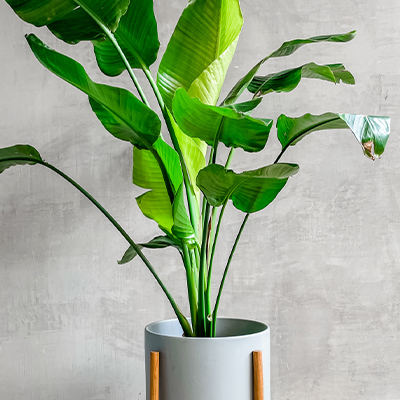
Strelitzia
Birds of Paradise
Strelitzia reginae
Also known as: bird of paradise
- Tropicals
- Full Sun
- Medium
- 105–120 cm
- Medium
Bird of Paradise (Strelitzia reginae) is a foliage plant native to tropical South Africa. These plants produce large, fan-shaped leaves and bright, unique tropical flowers in the shape of a bird, hence its common name. During the summer months, these flowers can last for many months in warm climates. They prefer bright light and moist, well-drained soil, making them a popular choice for indoor and outdoor gardens. Bird of Paradise is a moderately slow grower, but with proper care, it can reach up to 8 feet tall. This South African native may just be the showstopper of your garden!
- Resistant to
- Drought, Disease
Care guides
Watering
Watering a bird of paradise (Strelitzia reginae) depends on the season and the health of the plant. During the winter, the soil should be allowed to dry out and watered only when it is dry to the touch. During the summer, the soil should remain moist but not soggy. Water the plant regularly and check the soil moisture every few days to make sure it’s not too dry or too wet. A general guideline for the amount of water to use is to provide enough to saturate the soil to a depth of approximately 1 inch per week.
Sunlight
Bird of paradise (Strelitzia reginae) plants need full sun for most of the day, preferably at least 6 to 8 hours of direct sunlight per day. The best and healthiest growth for these plants will occur when they receive full sun from mid-morning to late afternoon. In some regions, this can be as much as 10 to 12 hours of direct sunlight per day. For bird of paradise plants, too much shade can cause the blooms to be few and far between, and can also stunt the plant's growth.
Pruning
Bird of paradise (Strelitzia reginae) should be pruned once in the spring in early April. Pruning can be done every 1 to 2 years to maintain the desired size of the shrub. The amount of pruning should be moderate. Trim away dead or damaged stems, and main branches can be thinned by 1-third to 1-half of their length, leaving enough leaves to still foster healthy growth. During pruning, avoid cutting close to the soil line as this can kill the plant or stunt its growth.