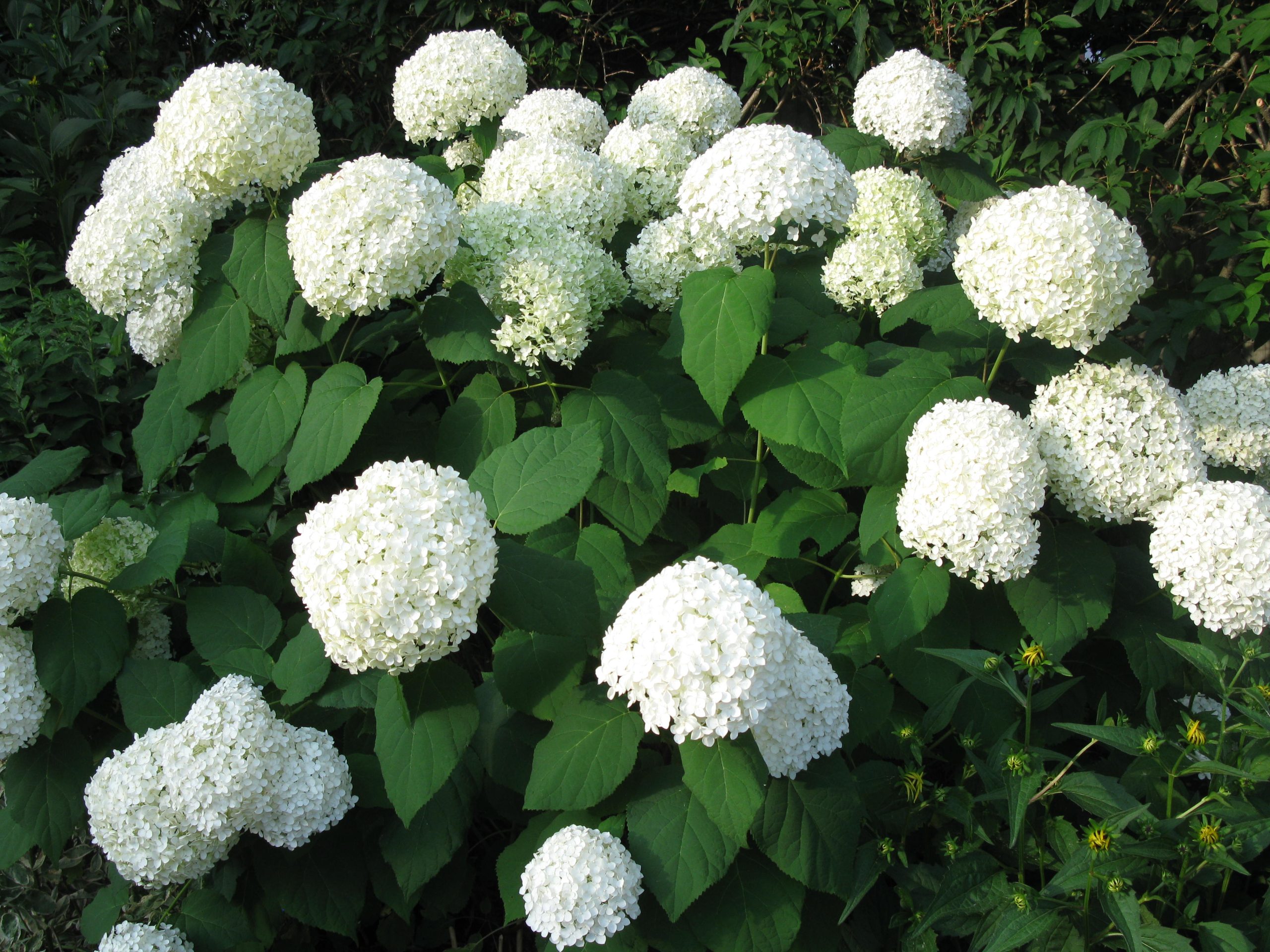
Hydrangea
Annabelle Hydrangea
Hydrangea arborescens
Also known as: wild hydrangea, sevenbark, smooth hydrangea
- Shrubs
- Part Shade
- Medium
- 90–150 cm
- Low
Smooth Hydrangea is an attractive and easy-to-grow shrub with large, showy flowers that bloom mid-summer. The white round flower-heads can reach up to a foot in diameter. This slow-growing plant, also known as Annabelle, prefer partial shade and moist, well-drained soil but can tolerate a wide range of conditions. In autumn, the large flower-heads age to an attractive shade of pink and eventually dry to a light brown. Smooth Hydrangeas are generally pest and disease resistant, making them very low-maintenance and ideal for novice gardeners.
- Resistant to
- Drought
Care guides
Watering
Smooth hydrangeas need regular watering to maintain soil moisture and encourage blooms. The best way to water these plants is by deeply and slowly watering them until the soil is moist to a depth of about 6 inches. During their growing season, which runs from April through October, smooth hydrangeas need to be watered once or twice a week. In drier climates, they may need to be watered more often. During the hot summer months, it may be necessary to water more frequently to maintain adequate soil moisture. During the winter months, when the plants are not actively growing, smooth hydrangeas should only be watered every 3 to 4 weeks.
Sunlight
Smooth Hydrangea (Hydrangea arborescens 'Annabelle') typically prefers full sun to part shade. On average, this plant requires 5 - 6 hours of direct sunlight each day; however, in particularly warm or exposed areas of the landscape, it may benefit from a bit of shade during the hottest part of the day, usually between 11am and 3pm. This will help protect it from harsh sunlight and high temperatures. It should generally be kept out of full shade as it may not bloom as well in those circumstances.
Pruning
Smooth hydrangeas (Hydrangea arborescens 'Annabelle') should be pruned in late winter or early spring. This is important because they bloom on new wood and pruning encourages vigorous and prolific blooms. Up to 1/3 of the oldest wood can be removed each year without compromising the size and vigor of the plants. Also, pruning encourages a denser, evenly rounded habit of the shrub. Any spent flower clusters should also be removed in early summer to encourage new blooms.